How to compare loans: understanding terms, APR and hidden charges
Choosing a loan can feel overwhelming. Every lender promises something slightly different — lower rates, flexible terms, quick decisions — but how do you compare them in a way that protects your wallet and your peace of mind?
Whether you’re borrowing for a car, home improvements, or to consolidate debt, understanding the key parts of a loan agreement helps you make a confident, informed choice, meaning you won’t pay more than you have to. Here’s what to look for.
Quick summary
- Loan amount and term
- How to compare APR properly
- The difference between interest rate and APR
- Hidden charges to watch out for
- Why total cost matters more than monthly payments
- What flexibility and fairness look like
- How interest is calculated
- How to use a loan calculator to compare options
Start with the basics: loan amount and term
Before diving into the fine print, check two simple things:
Loan Amount
This is the total you’re borrowing. Make sure it genuinely covers what you need so you don’t end up taking a second loan later.
But equally important, is not borrowing more than you need. Remember, you are paying interest on this amount. Only borrow the amount you realistically need and can afford to repay.
Loan Term
This is how long you’ll take to repay the loan.
- Shorter terms = higher monthly payments but lower total cost
- Longer terms = lower monthly payments but higher total cost
A loan that looks “cheaper” each month may cost you far more overall.
Compare APR
APR (Annual Percentage Rate) is the true cost of borrowing. It includes:
- The interest rate
- Any compulsory fees
- The cost spread over a year
Because APR is standardised, it’s the fairest way to compare one lender with another.
Why APR matters
Two loans with the same interest rate can have very different APRs if one includes extra charges. A lower APR usually means a cheaper loan overall.
Representative APR
You’ll often see “Representative APR” in adverts. This means at least 51% of applicants get that rate — not everyone. Your personal rate may be higher depending on your credit profile. Be aware when companies offer loans from a low APR, but the representative APR is much higher. This generally means that you will be paying more than the lowest rate on offer and will, most likely, be paying the representative APR
Annual Interest Rate vs APR
Annual Interest Rate
This covers the borrowing of the loan, but does not include any fees., tThis is great for calculating how much interest you will pay on a loan, but is less useful for comparing loans like for like. It doesn’t take into account how interest is charged, so even if a company has no fees, like Beacon Savings & Loans, there will still be a difference in the Annual Interest Rate and the APR.
APR
ARP shows the true cost of borrowing from a borrower, expressed as an annual rate. It includes interest and any fees, such as those shown below. Because it bundles in these extras and takes into account how interest is charged, it is almost always higher than the Annual Interest Rate.
At Beacon, we always show both the APR and the Annual Interest Rate on your loan agreement and on the terms and conditions on our website. We feel that transparency is important.
Watch out for hidden charges
Some lenders keep fees tucked away in the small print. These can make a loan far more expensive than it first appears. Remember, at Beacon we don’t have any hidden fees or charges.
Here are the most common ones to look for:
Arrangement or Administration Fees
A one-off charge for setting up the loan. Sometimes added to the loan amount (meaning you pay interest on it).
Early Repayment Charges
Some lenders charge you for paying off your loan early — even though you’re trying to be responsible.
Late Payment Fees
If you miss a payment, you may be charged a fixed fee.
Broker Fees
If you apply through a third party, check whether they add their own charges.
Insurance Add-ons
Some lenders bundle optional insurance products into the loan unless you opt out.
Tip: Always ask for a full breakdown of fees before signing anything.
Compare total costs, not just the monthly payment
It’s easy to be drawn to the lowest monthly repayment, but that number doesn’t tell the whole story.
When comparing loans, look at:
- Total amount repayable
- APR
- Length of the loan
- Any fees added to the balance
A slightly higher monthly payment could save you hundreds of pounds over the life of the loan.
Check for flexibility and fairness
A good loan isn’t just about cost — it’s about how well it fits your life.
Look for lenders who offer:
- No penalties for early repayment
- Clear, transparent terms
- Support if your circumstances change
- Straightforward communication
Ethical lenders, including credit unions, focus on affordability and member wellbeing rather than profit.
Use a loan calculator before you commit
A loan calculator helps you see:
- What your monthly payments will be
- How much interest you’ll pay
- How different terms affect the total cost
It’s a simple way to compare options side by side.
Check how interest is charged
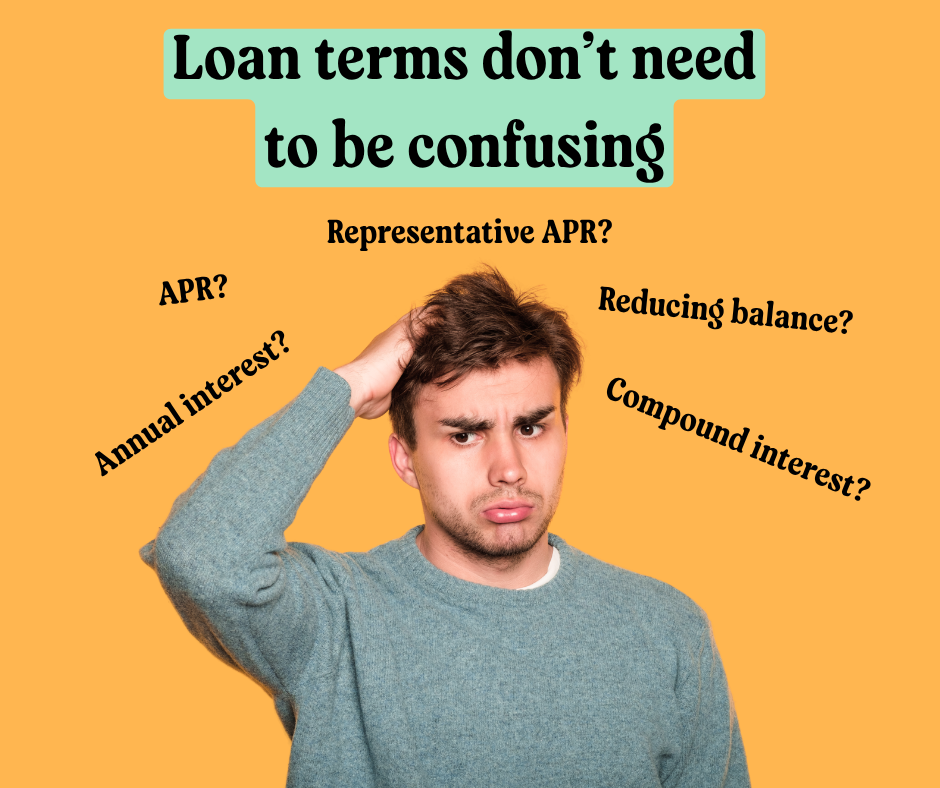
There are multiple ways to charge interest on loan.
- Reducing balance
- Periodic interest
- Compound interest
Reducing balance interest
Reducing balance interest is charged on the amount of the loan remaining and is usually calculated daily. This means that if you pay more off your principle loan amount, you will pay less interest on future payments.
You can calculate how much interest you will pay, although you’ll want the annual interest rate and not the APR.
Periodic Interest
Periodic Interest is charged at set times, often monthly. This may be charged on the principle amount that you borrowed, though it is sometimes charged on the balance you owe at a set point in time, i.e. the end of the previous month.
Compound Interest
Compound Interest is added to the amount of the loan and interest is then charged on this new loan amount. This is usually the most expensive way to borrow.
Borrow smart, not fast
The best loan for you isn’t always the one with the flashiest advert or the quickest approval. It’s the one that’s transparent, affordable, and fair — with no surprises hidden in the small print.
Take your time, compare carefully, and don’t be afraid to ask questions. A good lender will always be happy to explain.
The Beacon way
At Beacon we are transparent. No hidden fees, no early or late repayment fees (Yyou may incur additional interest if your payments are late). We will always tell you the total amount payable on your loan.
If you repay your loan more quickly you will pay less interest as interest is only ever charged on the amount that you owe, so when you pay more off your loan, the next time you pay interest will be based on a lower balance.